

A pull-up is one of the most rewarding bodyweight exercises to master, but getting your first pull-up can feel like a challenge when you're just starting out.
The good news is that every experienced gym goer was once a beginner, and with the right approach, you'll steadily work your way towards your goal.
At East Park Gym, we see plenty of members get their first pull-up by focusing on technique, consistency and building strength rather than simply attempting more pull ups.
Read on for practical tips that can help you get your first pull-up safely and confidently.
Why Is A Pull-Up So Challenging?
Unlike many gym exercises, a pull-up requires you to lift your entire bodyweight using your upper body. That means several muscle groups need to work together throughout the movement.
The main muscles involved include:
- Your latissimus dorsi (lat) and other back muscles
- Your biceps
- Your shoulders
- Your forearms and grip
- Your core for stability
If one of these areas is lacking in strength, the movement becomes much harder. Fortunately, each can be trained separately while following a pull-up progression.
Build Strength Before Your First Pull-Up
There's no shortcut to achieving your first pull-up, but building the right foundation makes a huge difference.
Some of the best exercises include:
Lat pull-downs to strengthen the lats through a similar movement.
Bodyweight rows to improve your pulling strength.
One dumbbell rows to target each side individually.
Bicep curl variations to develop stronger arms.
General strength training for your shoulders, back and core.
Aim for 3 sets of each exercise while choosing a weight that allows you to maintain proper form.
Practice Assisted Pull-Ups
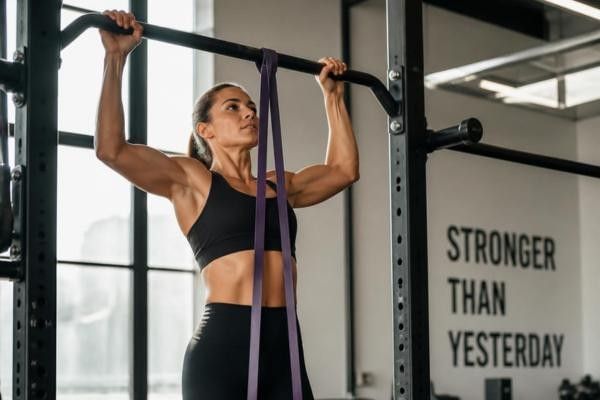
An assisted pull-up is one of the best ways to prepare for a full pull-up.
Using a resistance band or an assisted pull-up machine reduces some of your bodyweight, allowing you to complete the entire movement while maintaining good technique.
Focus on:
Gripping the bar with your palms facing away at roughly shoulder-width apart.
Engage your shoulders before you begin pulling.
Keep your body in a hollow body position.
Think about driving your elbows down rather than simply trying to pull the bar.
Lower yourself back under control.
As you build your strength, use less resistance as you get stronger.
Use Negative Pull-Ups
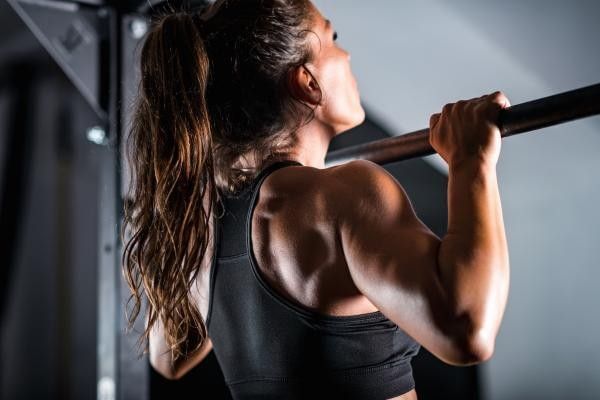
Negative pull-ups are excellent because they build pull-up strength through time under tension.
Instead of pulling yourself up from the bottom, begin in the top position with your chin over the bar.
From there:
- Slowly lower yourself back until your arms are fully extended.
- Return to the top position using a box or by performing jumping pull-ups.
- Repeat for several controlled repetitions.
This method helps strengthen the muscles used throughout the movement while helping you achieve your first pull-up.
Don't Forget Chin-Ups
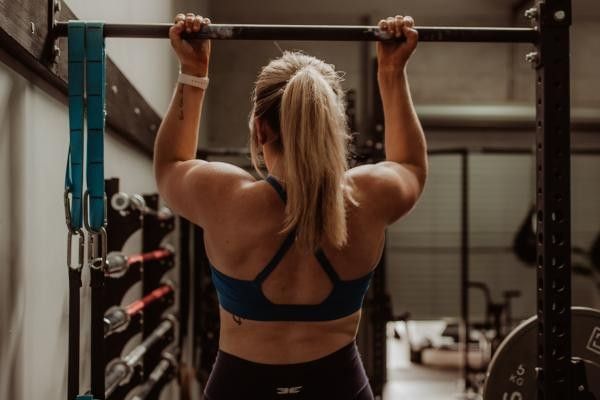
Although a chin-up looks similar to a pull-up, it uses an underhand grip with your palms facing towards you.
Many beginners find chin-ups slightly easier because the biceps contribute more to the movement.
If you're struggling to start doing pull-ups, adding chin-up practice alongside your training can help increase your overall pulling strength.
Improve Your Grip And Hang Time
Sometimes it's not your back that gives up first, but your hands.
Simply hang from the bar for as long as possible to improve your grip and hang time.
Try both:
- A straight-arm hang
- An arm hang with your elbows slightly bent
Being comfortable holding onto the pull-up bar makes the exercise feel much more controlled.
Be Patient With Your Pull-Up Progression
Everyone progresses at a different pace.
Rather than testing your max reps every workout, focus on gradually building strength through consistent training.
Remember to:
- Train two or three times each week.
- Prioritise quality over quantity.
- Complete your exercises through a full range of motion.
- Allow enough recovery between sessions to support strength gains and reduce the risk of injury.
Over time, you'll notice your first full pull-up becoming much closer than you think.
FAQs related to Getting Your First Pull-Up
How long does it take to get your first pull-up?
It varies depending on your current fitness level.
Regular strength training and consistent practice can help you get your first pull-up within a few weeks to several months.
Should beginners do pull-ups every day?
Not usually. Your muscles need time to recover.
Training two or three times each week is generally enough to improve while avoiding overtraining.
Are assisted pull-ups worth doing?
Yes. An assisted pull-up allows you to practise the correct movement pattern while gradually increasing strength until you can perform a full pull-up independently.
Should I do chin-ups or pull-ups first?
If you're a beginner, starting with a chin-up can be helpful because the movement places greater emphasis on the biceps, making it slightly easier for many people.
What muscles do pull-ups work?
A pull-up mainly targets the latissimus dorsi, upper back, shoulders, biceps, forearms and core, making it a great exercise for overall upper body strength.
What's the biggest mistake beginners make?
Trying to perform too many full pull-ups too soon. Following a structured pull-up progression, using negative pull-ups, bodyweight rows and assisted variations will usually produce better long term results.
Can everyone achieve their first pull-up?
In most cases, yes. With patience, consistent practice and progressive training, most people can get their first pull-up regardless of their starting point.